Salvage Car Guide: What Is a Salvage Car and Should You Buy One?
Learn what a salvage car is, why it gets a salvage title, the risks of buying one, and how to check its title and vehicle history before you buy.
On this page
- What Is a Salvage Car?
- Why Do Cars Receive Salvage Titles?
- What Is the Difference Between a Salvage Title and a Rebuilt Title?
- Can a Salvage Car Have a Clean Title?
- Are Salvage Cars Worth Buying?
- How Much Cheaper Is a Salvage Car?
- How to Check a Salvage Car Before Buying
- Step 1: Find the Vehicle Identification Number (VIN)
- Step 2: Decode the VIN
- Step 3: Review the Vehicle History Report
- Step 4: Examine Auction Photos and Previous Listings
- Step 5: Get an Independent Professional Inspection
- Step 6: Verify the Title and Legal Requirements
- Step 7: Check Insurance Before You Buy
- What Warning Signs Should You Look For?
- Can You Drive a Salvage Car on Public Roads?
- Can You Insure a Salvage or Rebuilt Car?
- Is It Possible to Finance a Salvage Car?
- How to Calculate Whether a Salvage Car Is a Good Deal
- Salvage Cars vs. Clean-Title Cars: Which Is Better?
- Sources
- Frequently asked questions
- Sources

A salvage car is a vehicle an insurance company declared a total loss after an accident, flood, fire, theft or hail damage. It usually sells for less, but it can hide costly damage and be harder to register, insure, finance and resell. Check the VIN, auction photos and get an independent inspection before buying.
A salvage car is a vehicle that an insurance company declared a total loss after an accident, flood, fire, theft or hail, because repairing it would cost too much compared with its value. It can sell for much less than a clean-title car, but it can also hide expensive damage and be harder to register, insure, finance and resell.
Check this car’s title
Salvage, rebuilt and flood brands from every reporting state.
This guide explains what a salvage title car is, why cars get one, how salvage differs from rebuilt and clean titles, and the exact checks to run before buying a salvage car.
What Is a Salvage Car?
A salvage title car is a vehicle that an insurance company has declared a total loss, usually because repairs would cost too much compared with its value. The state then brands its title "salvage" (or a similar word), and that brand follows the car to every future owner.
Here is how it usually happens. A car is worth $18,000 before a crash. The repair estimate comes back at $13,000. Based on its own rules and state law, the insurer decides that paying the owner is cheaper than fixing the car, so it takes the car and sells it, often at a salvage auction. Rebuilders, dismantlers and private buyers then bid on it.
The title brand tells you the car was a total loss. It doesn't tell you why. Two salvage cars can be completely different: one may need a new bumper and headlights, while the other sat in floodwater up to the dashboard. That's why you need to research the specific car, not just its title or price. Before you go further, it helps to check the VIN for salvage records.
Why Do Cars Receive Salvage Titles?
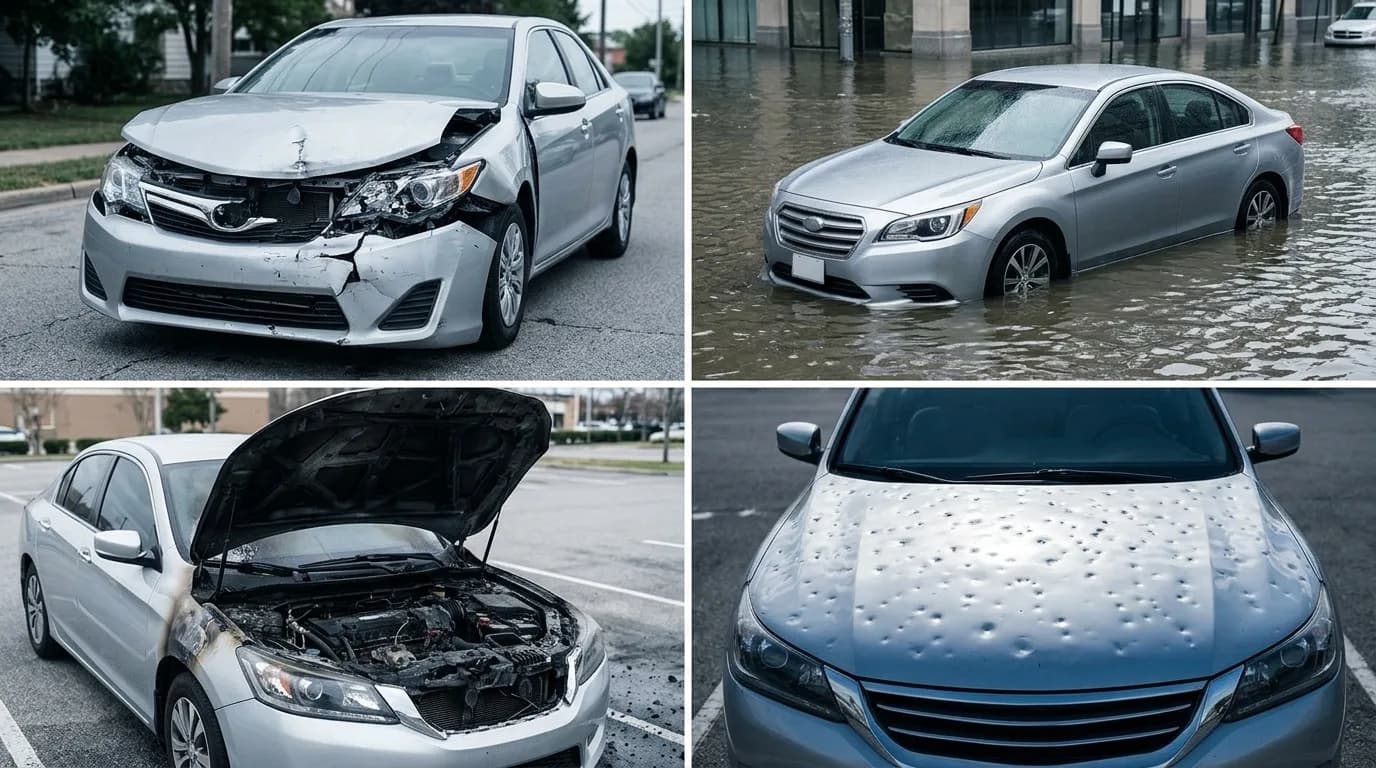
The cause of the total loss tells you where to look during an inspection. These are the five most common reasons.
1. Accident Damage
Collisions are the most common reason a car becomes a salvage car. A hard impact can bend the frame and damage the suspension, steering, airbags, cooling system and wiring. New body panels and fresh paint can make the car look perfect while structural damage stays underneath.
Ask where the impact was and which parts were replaced. Front-end and side impacts near structural points deserve the closest look.
2. Flood Damage
Flood cars are among the riskiest to buy because water reaches places you can't see. Depending on how deep the water was and how long the car sat in it, flooding can damage:
- The engine and transmission
- Wiring, connectors and electronic control modules
- Airbag sensors and seat belt systems
- Carpet padding, insulation and seat foam
- Wheel bearings and other moving parts
Corrosion often shows up weeks or months later as warning lights or electrical faults that come and go. A flood car that starts and drives fine on a test drive can still fail later. Learn the signs of a flood-damaged car before you look at one in person.
3. Fire Damage
Fire damage usually spreads beyond the burned area. Heat melts wiring insulation and plastic parts, weakens rubber seals and can affect structural metal. Smoke and extinguisher residue also get into the cabin and vents. Unless you know exactly how far the damage went, a fire-damaged car needs a professional inspection before you make an offer.
4. Theft Recovery
If a stolen car is found after the insurer has already paid the owner, the insurer may own it and sell it with a salvage title. Some recovered cars are almost untouched. Others are missing wheels, seats or electronics, or have damaged ignition locks.
Check that the VIN on the dashboard, the door label and the title all match. Altered or missing VIN labels on a recovered car are a reason to walk away.
5. Hail and Other Damage
Severe hail can dent every panel and crack the glass. On an older car with a lower value, even cosmetic hail damage can cost more to fix than the car is worth, so the insurer totals it. Falling trees and vandalism can lead to the same result.
Hail-damaged salvage cars are often mechanically sound, which makes them one of the lower-risk types if the rest of the history is clean.
What Is the Difference Between a Salvage Title and a Rebuilt Title?
A salvage title means an insurer declared the car a total loss, and in most states it can't be driven or registered in that stage. A rebuilt title comes later: the car was repaired and passed a state inspection, so it can go back on the road. The brand stays on the title for life.
States use different names for the same stages, such as "Rebuilt", "Reconstructed" or "Prior Salvage", and each state sets its own inspection rules. For a full side-by-side comparison of road use, insurance, financing and resale value, see our guide on salvage vs rebuilt title.
Salvage Title
A car with an active salvage title usually can't be registered for normal road use. Some are sold only for parts. Others are bought by rebuilders who plan to repair them and apply for a rebuilt title. A salvage title doesn't mean the car can't be fixed, and it doesn't mean it can be fixed at a reasonable cost either.
Rebuilt Title
A rebuilt title means the car was repaired and passed the state's inspection. That inspection mainly checks paperwork, the VIN, parts receipts and basic safety items such as lights and brakes. It doesn't confirm that the frame was straightened correctly or that the airbags were replaced with new parts. Repair quality still has to be checked by your own mechanic.
Clean Title
A clean title means the state hasn't recorded a brand such as salvage, rebuilt or flood on the title. It doesn't mean the car has never been damaged. Accidents paid in cash, never reported to an insurer, or reported late may not appear anywhere. Learn what a clean title really means before you trust one.
Can a Salvage Car Have a Clean Title?
Yes, it can happen. A car branded salvage in one state is sometimes moved and retitled in another state where the brand isn't carried over or is missed. This is called title washing, and it's one of the main ways damaged cars reach buyers without a warning on the title.
Most clean titles are genuine. But a clean title on a car with obvious repair work, auction photos showing damage, or a history that jumps between states should make you dig deeper. Compare the title with the vehicle history report, the VIN labels on the car and what the inspector finds. If the seller's story doesn't match the records, ask for documents before you go any further.
Are Salvage Cars Worth Buying?
Buying a salvage car can make sense if you understand the damage, know the full repair cost and plan to keep the car for years. For most buyers who need simple, reliable transportation, a clean-title car with a good inspection is the safer choice.
Advantages of Buying a Salvage Car
Lower price. Salvage and rebuilt cars usually sell for less than the same car with a clean title.
Repair projects. Mechanics, body shops and experienced hobbyists can buy a car with known, fixable damage and repair it themselves.
Parts value. A car with a damaged body but a good engine and transmission can be worth buying for parts.
Value after a good repair. A well-documented, properly repaired rebuilt car can be good value if you keep it long enough that the lower resale price matters less.
Disadvantages of Buying a Salvage Car
Hidden damage. Frame, suspension, electrical and airbag problems are often invisible on a test drive.
Repair costs that grow. Once panels come off, mechanics often find more damage than the first estimate showed.
Insurance limits. Some insurers only offer liability coverage on rebuilt cars or ask for inspections and photos first.
Harder financing. Many lenders won't finance salvage cars, and some limit loans on rebuilt cars.
Lower resale value. Fewer buyers want a branded title, so you'll sell for less later.
Registration hurdles. A salvage car needs repairs, paperwork and an inspection before it can be driven legally.
How Much Cheaper Is a Salvage Car?
There's no fixed discount. The price gap depends on the make and model, age, mileage, the type of damage, how well it was repaired, the title brand and your local market. A rebuilt car with minor hail damage and full repair records will sell differently from one that was flooded.
Compare the car with similar cars that have the same title status, not with clean-title prices. Then add every cost you'll pay before the car is on the road:
- Purchase price
- Auction, buyer and transportation fees
- Parts and labor
- Diagnostic and inspection fees
- State inspection, title and registration fees
- Taxes
- Insurance
- A contingency for repairs you didn't plan for
How to Check a Salvage Car Before Buying
No single check catches everything. Use these seven steps together, in this order.
Step 1: Find the Vehicle Identification Number (VIN)
The VIN is the car's unique 17-character ID. You'll usually find it:
- On the driver's side of the dashboard, visible through the windshield
- On the label inside the driver's door jamb
- On the title and registration
- On insurance cards and service records
All of them must match. If a VIN label looks scratched, painted over, loose or replaced, stop until the seller can explain it with documents. Not sure what you're looking at? Here's how to read a VIN.
Step 2: Decode the VIN
Decoding confirms the year, make, model, engine and factory where the car was built. If the decoded details don't match the car in front of you, that's a red flag. You can use our free VIN decoder to confirm the year, make, model and engine.
Decoding doesn't show accidents, title brands or mileage. It only confirms what the car is, so treat it as step two, not the whole check.
Step 3: Review the Vehicle History Report
A vehicle history report pulls records linked to the VIN. Depending on the car and its data sources, it can show:
- Title brands such as salvage, rebuilt, flood or junk
- Total loss and insurance records
- Odometer readings over time
- Title and registration history by state
- Auction sales and photos
- Theft records
Title brands are reported to the National Motor Vehicle Title Information System (NMVTIS), run by the U.S. Department of Justice. Not every event gets reported, so read the report as evidence, not a guarantee.
For a salvage car, read the records in date order. Look at when the damage happened, when the title changed, which states it passed through and whether the mileage keeps going up. You can run a VIN check to see title brands, salvage records and odometer readings before you meet the seller.
Title brand data comes in part from NMVTIS. NMVTIS does not include every state's full history, and no report can guarantee a vehicle's condition.
Step 4: Examine Auction Photos and Previous Listings
Auction photos are the best way to see the damage before it was repaired. New panels and paint can hide a lot, but the photos can't. Look for:
- Damage to the front or rear frame rails
- Deployed airbags
- Water lines or mud inside the cabin
- Missing parts
- Bent wheels or suspension parts
- Damage near the pillars or the roof
Photos can't show how well the car was repaired. Use them to tell your inspector exactly where to look.
Step 5: Get an Independent Professional Inspection
A history report can't replace a mechanic. Choose your own inspector, not one the seller recommends, and ask them to check:
- Frame alignment and structural welds
- Suspension and steering parts
- Engine and transmission
- Brakes and cooling system
- Airbags, seat belts and restraint system codes
- Stored diagnostic trouble codes in every module
- Corrosion and signs of water inside
- Quality of body and paint work
- Tire wear and wheel alignment
For a car with major collision damage, a regular mechanic may not be enough. A collision repair shop with frame measuring equipment can confirm whether the structure is straight. Bring our used car inspection checklist so you don't miss anything.
If the seller won't allow an independent inspection, walk away.
Step 6: Verify the Title and Legal Requirements
Look at the paper title and confirm its status with the state motor vehicle agency that issued it. Check whether it says salvage, rebuilt, reconstructed, parts only or another brand.
If you plan to drive the car, ask the agency what it needs: repair receipts, photos, an inspection and fees. A car that starts and drives isn't automatically legal to register.
Step 7: Check Insurance Before You Buy
Call at least two insurers before you pay. Give them the VIN and the exact title status, and ask:
- Will you insure this car for daily use?
- Can I get collision and comprehensive coverage, or liability only?
- Do you need an inspection, photos or repair receipts first?
- How will you value the car if it's totaled again?
Get the answers in writing if you can.
What Warning Signs Should You Look For?
These signs don't always mean a bad car, but each one needs an answer before you pay.
Inconsistent Vehicle History
The seller says "never damaged", but the report shows a total loss or a salvage brand. Ask for repair invoices and an explanation. If they can't give either, move on.
Unexplained Mileage Changes
Odometer readings that go down, jump suddenly or don't match service records need an explanation. A drop in readings can be a sign of odometer rollback, which also affects what the car is worth.
Poorly Repaired Structural Areas
Uneven panel gaps, rough or uneven welds, bent metal under the car and a paint shade that changes from one panel to the next all point to collision repair. Good repairs can be hard to see, so trust the inspector over your eyes.
Electrical Problems After Flood Exposure
Green or white corrosion on connectors, warning lights that come and go, and power windows or screens that act up are common after a flood. These faults are hard to fix completely and often come back.
Missing Airbag or Safety-System Components
An airbag light that stays off doesn't prove the airbags work. Some bad repairs disable the warning light. Ask your inspector to scan the restraint system and confirm the airbags were replaced with proper parts.
Pressure to Buy Immediately
A seller who rushes you, refuses an inspection, won't show the title or wants cash before you can check the VIN is a warning sign on its own. A low price is never a reason to skip the checks.
Can You Drive a Salvage Car on Public Roads?
In most states, no. A car with an active salvage title usually can't be registered for normal driving until it's repaired, passes a state inspection and gets a rebuilt title. Some states allow a temporary permit to drive the car to the inspection. Cars branded parts only or junk usually can never return to the road.
Check with the state motor vehicle agency before you drive. Don't rely on the seller saying the car is road legal.
Can You Insure a Salvage or Rebuilt Car?
A car with an active salvage title is hard to insure because it usually can't be registered. Once it has a rebuilt title, many insurers will offer liability coverage. Collision and comprehensive coverage vary more: some insurers offer them after an inspection, some don't.
If a rebuilt car is totaled again, the payout is usually based on the value of a rebuilt car, not a clean-title one. Ask how the insurer values the car before you buy.
Is It Possible to Finance a Salvage Car?
It's harder than financing a clean-title car. Many banks won't lend on salvage cars, and some won't lend on rebuilt cars either, because the value is harder to judge. Credit unions and specialist lenders are sometimes more flexible.
If you need a loan, get approval for that specific car before you make an offer. If you pay cash, you avoid the loan problem but not the repair or resale risk.
How to Calculate Whether a Salvage Car Is a Good Deal
Add up everything you'll spend to get the car legally on the road, then compare that total with what the same car is worth with the same title status.
Here's an example with illustrative numbers, not market averages:
| Expense | Estimated amount |
|---|---|
| Salvage car purchase | $4,500 |
| Auction and transportation fees | $600 |
| Parts and repair labor | $2,000 |
| Inspections, title and registration | $300 |
| Repair contingency | $1,000 |
| Total estimated cost | $8,400 |
If a similar rebuilt car sells for about $9,000 in your area, you save only $600. That's before insurance, your time and the lower resale value. For most buyers, that margin is too small for the risk.
A buyer who does their own repairs, gets parts cheaply and has full records of the damage may see a much bigger saving. Always use real repair quotes and real prices for cars with the same title brand.
Salvage Cars vs. Clean-Title Cars: Which Is Better?
For most buyers who need a reliable daily car, a clean-title car with service records and a good independent inspection is the better choice. A salvage or rebuilt car fits buyers who understand the damage, have a trusted repair shop and have run the numbers.
| Factor | Salvage or rebuilt car | Clean-title car |
|---|---|---|
| Purchase price | Usually lower | Usually higher |
| Repair risk | Can be high | Depends on condition and history |
| Insurance | May be limited | Usually straightforward |
| Financing | Harder to get | More options |
| Resale | Fewer buyers, lower price | Wider market |
| Inspection | Essential | Still recommended |
| History check | Essential | Essential |
Whichever you choose, start with the VIN. Check the title history, look at past photos, get an independent inspection and confirm insurance before you hand over any money.
Sources
- National Motor Vehicle Title Information System (NMVTIS), U.S. Department of Justice
- NICB VINCheck, National Insurance Crime Bureau
- NHTSA Recalls, National Highway Traffic Safety Administration
- Consumer Advice, Federal Trade Commission
Frequently asked questions
What does salvage title mean on a car?
A salvage title generally indicates that a vehicle has been classified as salvage under applicable state rules, often following a total-loss event. The exact definition and restrictions vary by jurisdiction.
Is a salvage car always damaged beyond repair?
No. Some salvage vehicles can be repaired, while others may be unsuitable or uneconomical to rebuild. The nature of the damage and the relevant legal requirements determine what is possible.
Can a salvage car become a rebuilt-title car?
In many jurisdictions, a salvage vehicle can receive a rebuilt or reconstructed designation after satisfying the applicable repair, documentation, and inspection requirements. The process varies by state.
Does a salvage title mean the car was in a serious accident?
Not necessarily. Vehicles can receive salvage designations for several reasons, including collisions, floods, fires, and other total-loss events. The actual cause and extent of the damage should be investigated.
Can a VIN check reveal whether a car has a salvage title?
A vehicle history report may identify reported salvage or other title brands associated with a VIN. However, available records vary, and a report cannot guarantee that every title event has been captured. Verify important title information through authoritative records.
Can a clean-title car have a salvage history?
It is possible for a vehicle's available title documentation to be incomplete or inconsistent with its earlier history. Title-branding rules and reporting practices vary. Reviewing historical records can help identify discrepancies, but no single check is conclusive.
Are rebuilt-title cars safe?
Safety depends on the original damage, the quality of the repairs, the condition of safety systems, and the vehicle's current mechanical and structural integrity. A rebuilt designation alone does not guarantee that every repair was performed correctly.
Should I buy a flood-damaged car?
Flood-damaged vehicles can present difficult-to-detect electrical, mechanical, and corrosion problems. Consider the specific extent of water exposure, obtain a qualified inspection, and carefully compare the risks with the potential savings.
Not necessarily. Insurance premiums and coverage depend on the insurer, vehicle, title status, location, and policy. Some insurers may impose restrictions or decline certain vehicles. Obtain quotes before buying.
Sources
- National Motor Vehicle Title Information System (NMVTIS), U.S. Department of Justice (National Motor Vehicle Title Information System (NMVTIS), U.S. Department of Justice)
How useful was this guide?
Click a star to rate it.
No ratings yet. Be the first to rate this guide.
Newsletter
Get the used-car buyer’s brief
One email a month: new guides, major recalls and title-fraud alerts. No spam, unsubscribe anytime.
Comments (0)